
Animal welfare workshop

Putting animal welfare standards into practice

Header
FOUR COUNTRIES · THREE DAYS · ONE GOAL
Turning animal welfare standards into everyday practice
Teams from government and the private sector in Cambodia, Lao PDR, Thailand and Viet Nam build partnerships and clear laws for better animal welfare.
CambodiaLao PDRThailandViet Nam
3–5 November 2026 · Hanoi, Viet Nam
In this page

Why this workshopAimsWho takes partProgrammePresentationsPhotosPartners and contacts

3–5 Nov
Three full days
Hanoi
Viet Nam
4 countries
Government and private sector teams
About 40
participants, including partners and WOAH staff

Full title: Sub-regional Workshop on Operationalising Animal Welfare through Inclusive Public–Private Partnerships and Enabling Legal Frameworks in Southeast Asia.

What is a public–private partnership?
A public–private partnership (PPP) is an agreement between government and private groups, such as farms, companies and veterinarians, to work together towards a shared goal. Here, the goal is better animal welfare.

Why this workshop?

Animal welfare supports healthy animals, responsible farming and safe trade. WOAH sets standards for it in the Terrestrial Animal Health Code, including Chapter 7.6, on animal welfare at the time of killing for purposes other than slaughter, and Chapter 7.13, on animal welfare in pig production systems.

In 2025 and 2026, the WOAH Sub-Regional Representation for Southeast Asia, working under the Regional Animal Welfare Strategy (RAWS) for Asia-Pacific, ran Training-of-Trainers (ToT) workshops on pig welfare and humane killing for disease control. The workshops built skills in animal behaviour, welfare assessment and humane handling, and created a group of local trainers. Participants from Cambodia, Lao PDR, Thailand and Viet Nam told us the same thing: more people now know the standards, but using them in daily work is still hard.

No clear procedures
There are few step-by-step working procedures to follow.
Not enough resources
Teams often lack the people, equipment and money they need.
Weak coordination
Government bodies and other organisations do not always work together well.

Change needs more than government. Companies, farmers, producer groups, veterinarians, community animal health workers and civil society all play a part.

Laws matter too. In the four countries, veterinary laws only partly recognise these roles and often lack rules for cooperation, accountability and investment.

Civil society groups, including members of the International Coalition for Animal Welfare (ICFAW), a WOAH partner, ask for strong safeguards. Partnerships must be open, fair and judged by real results for animals, with clear rules to avoid uneven enforcement and weak oversight.

This workshop follows Resolution No. 35 of WOAH’s 92nd General Session, which calls for more cooperation and better governance to put animal welfare standards into practice. The Animal Health Forum at the 93rd General Session also showed that private companies help with services, funding, new ideas and value chains. Clear laws make investment less risky.

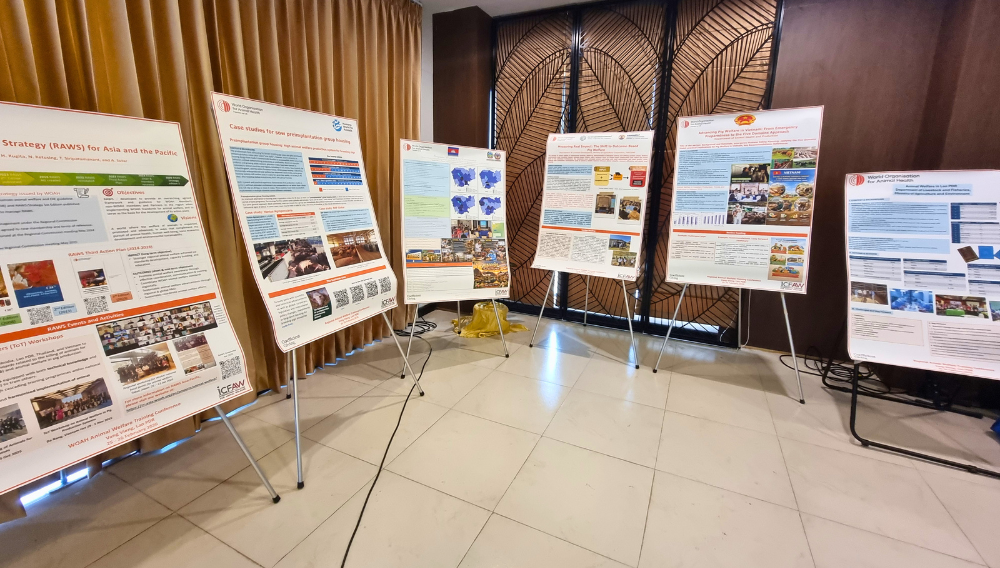
Poster boards set up in a meeting room for group work at the animal welfare training conference in Lao PDR, February 2026

What we want to achieve

1. Check the rules
Look at current laws and institutions. Find what helps or blocks work with the private sector.
2. Design partnerships
Create partnership models with clear roles, built-in accountability and ways to attract investment.
3. Make a plan
Each country drafts a roadmap that joins legal change, new partnerships and practical action.
4. Work as a region
Strengthen cooperation and the use of WOAH standards across Southeast Asia.

What we expect to see

  • Better understanding of how to put WOAH animal welfare standards into practice through partnerships.
  • Each country reviews its laws and institutions and finds priority gaps.
  • Practical partnership models with clear roles and ways to track results.
  • Draft country roadmaps for legal change, stakeholder involvement and investment.

How the workshop works

This is a hands-on workshop, not a series of lectures. Participants share experience, discuss challenges openly and build their own solutions.

Look at the laws
Check whether current laws support or block private sector involvement.
Design together
Four theme groups design partnerships: capacity building, infrastructure and equipment, service delivery, and emergency response for disease control.
Find the money
Explore incentives, financing models and market-based approaches.

The workshop uses the WOAH Public–Private Partnership Handbook. It also supports skills under the WOAH Performance of Veterinary Services (PVS) Pathway.

Who takes part

Each country sends eight participants: four from the public sector and four from the private sector, all with decision-making roles and experience in animal welfare, especially pig production.

Public sector
Veterinary Services staff working on animal welfare, laws, livestock, disease control or policy.
Private sector
Decision makers from pig farms, livestock companies, slaughterhouses, meat processors, veterinary associations, non-governmental organisations and universities.
Partners and WOAH
Partners from ICFAW, and WOAH staff.

Women’s participation: we aim for at least 40% women among participants and will count participants by gender.

Three steps, from preparation to results

Step 1 · Prepare
Online orientation webinar on 14 October 2026 (15:00 Bangkok time).
Step 2 · Meet in Hanoi
Workshop on 3–5 November 2026 to assess, plan and design partnerships.
Step 3 · Report
Report and recommendations, then follow-up on each country roadmap.

How we check learning: daily group exercises and short quizzes, and a short survey at the end.

Caring for the environment: we aim to use less paper, avoid food waste and save energy.

Programme

This programme is a draft, and times may change.

DAY 1 · 3 NOVEMBER
Building the foundation. Share a vision, check how ready the system is and map the partnership landscape.
DAY 2 · 4 NOVEMBER
Designing solutions together. Bridge the gaps with partnership models for four themes.
DAY 3 · 5 NOVEMBER
Agreeing actions. Finish country roadmaps, present them and make commitments.

Select a day to see the timetable.

Day 1: Building the foundation
View
Opening and strategic framing
08:30–09:00
Registration
09:00–09:45
Opening addresses by the WOAH Delegate of Viet Nam and the WOAH Sub-Regional Representative. Official photo, introduction of participants and a short exercise on what everyone expects.
Session 1: Review of regional capacity-building results (2024–2025)
09:45–10:45
Cambodia, Lao PDR, Thailand and Viet Nam each share progress made and challenges faced.
10:45–11:00
Interactive exercise: animal welfare as a shared responsibility
11:00–11:20
Break
Session 2: Finding the gaps – how ready are the public and private sectors?
11:20–12:00
Group work 1: Who influences animal welfare? Groups draw a map of who is responsible for what.
12:00–12:20
Short break
12:20–13:00
Group work 2: Assess the setting for putting animal welfare into practice. Each group completes a poster.
13:00–14:00
Lunch
14:00–15:00
Group work 3: Check the skills needed to put WOAH animal welfare standards into practice.
15:00–16:00
Group work 4: Find opportunities for inclusive public–private partnerships. Each group completes a poster.
16:00–16:30
Break
16:30–17:30
Groups present their results
17:30–18:00
Reflection on Day 1: key lessons on systems and partnerships
18:00
Reception dinner
Day 2: Designing solutions
View
09:00–09:15
Recap of Day 1 and goals for Day 2
Session 3: Developing practical animal welfare improvement projects
09:15–09:45
Introduction to the themes and forming four groups
09:45–11:00
Technical talks on the themes and WOAH standards, by WOAH and partners
11:00–11:20
Break
11:20–13:00
Group work 5, part A: Draft a partnership proposal: activities, roles and responsibilities. All four groups use the same template.
13:00–14:00
Lunch
14:00–15:00
Group work 5, part B: How to start and set up the partnership
15:00–16:00
Group work 5, part C: Monitoring and evaluation
16:00–16:30
Break with a short group activity
16:30–17:30
Plenary session: groups share their proposals
17:30–18:00
Reflection on Day 2
Day 3: Agreeing actions
View
09:00–09:15
Recap of Day 2 and goals for Day 3: moving from design to action
Session 4: Drawing up each country’s animal welfare improvement roadmap
09:15–10:30
Draft the roadmap: partnership checklist, key performance indicators (KPIs) and timeline
10:30–11:00
Viet Nam presents its roadmap and receives technical feedback
11:00–11:30
Break
11:30–12:00
Thailand presents and receives technical feedback
12:00–12:30
Lao PDR presents and receives technical feedback
12:30–13:00
Cambodia presents and receives technical feedback
13:00–14:00
Lunch
14:00–14:30
Reflections from all group discussions
14:30–15:00
Review of the workshop objectives and the feedback form
Closing session: commitments
15:00–16:15
Summary of key lessons, closing remarks from WOAH and the host country, and vote of thanks
16:15–16:30
Refreshments and end of workshop

Presentations

COMING SOON
PowerPoint presentations will be uploaded here soon.

Note: The photos below are from previous Training-of-Trainers (ToT) workshops in the same project series. Photos from this workshop will be uploaded soon.

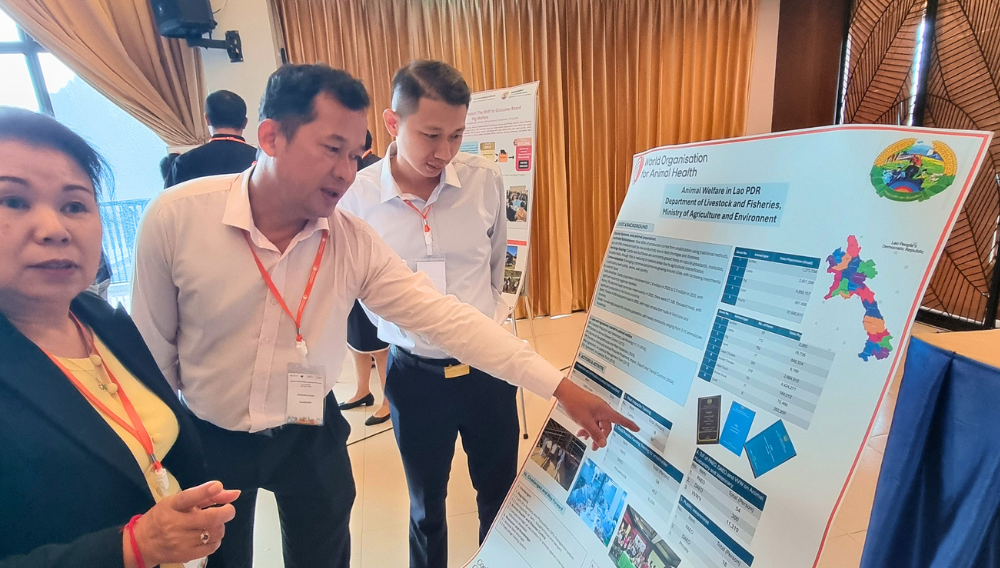
Participants discuss a poster during group work at the animal welfare training conference in Lao PDR
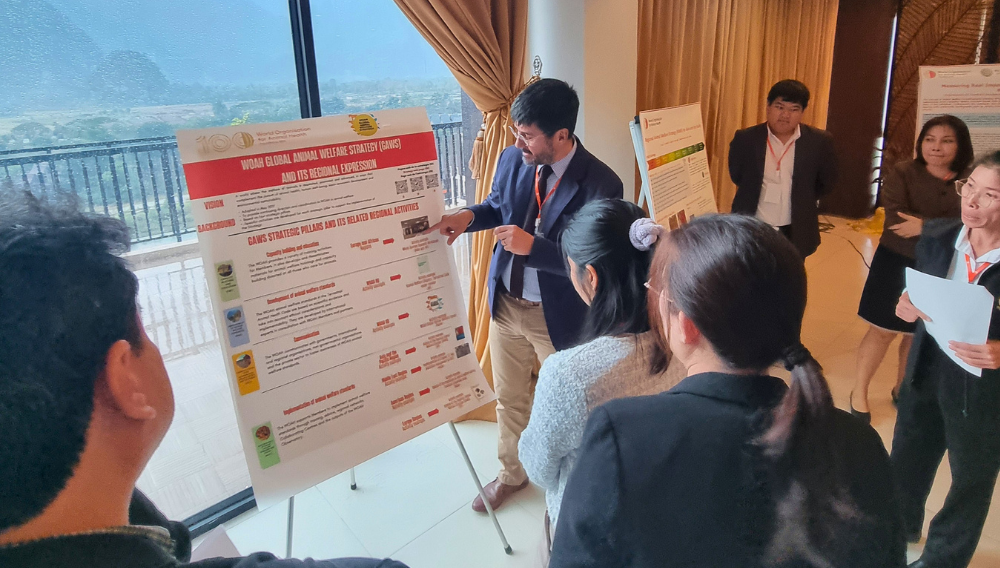
Participants gather around a poster during group work at the animal welfare training conference in Lao PDR
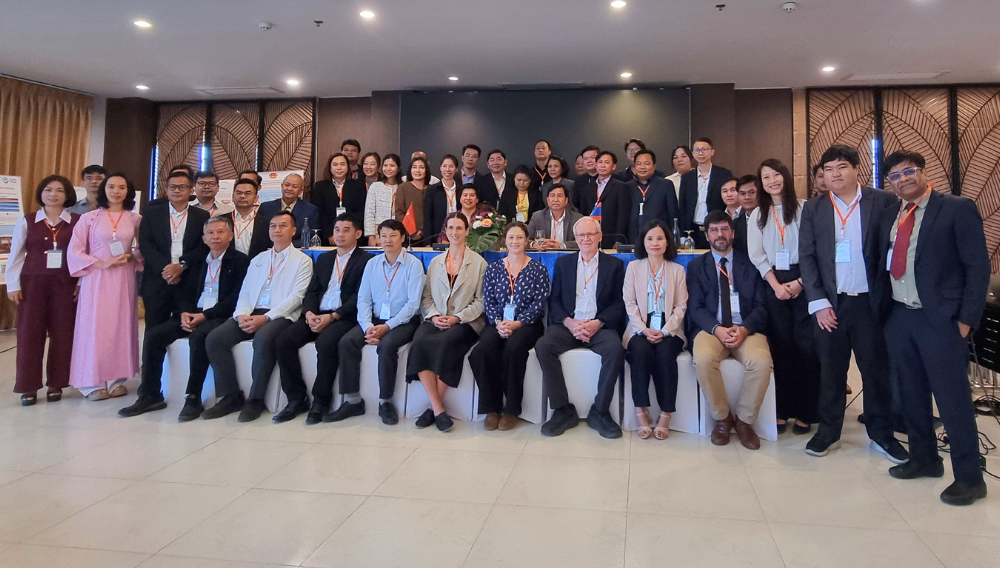
Group photo of participants in a meeting hall at the animal welfare training conference in Lao PDR
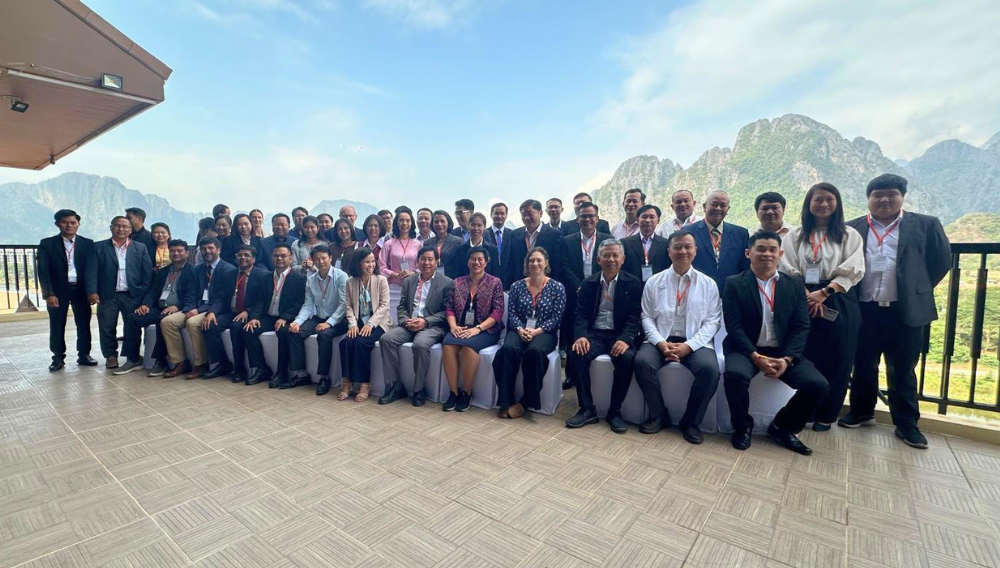
Group photo of participants on a terrace with mountains behind, animal welfare training conference in Lao PDR

Partners and support

Host country
Viet Nam
Donor
Coefficient Giving, which funds the workshop
WOAH partner
International Coalition for Animal Welfare (ICFAW)

The WOAH team

Sub-Regional Representation for Southeast Asia
Ashish Sutar
Parptawan Jiwattayakul
Onsiri Benjavejbhaisan
Regional Representation for Asia and the Pacific
Jacqueline Lusat
WOAH Headquarters
Rahul Srivastava
Leopoldo Stuardo

Who to contact

Technical questions
Dr Rahul Srivastava
Senior Programme Manager, PVS Targeted Support
WOAH Headquarters
Coordination
Dr Ashish Sutar
Capacity Building Coordinator
WOAH Sub-Regional Representation for Southeast Asia
Logistics
Ms Onsiri Benjavejbhaisan
Senior Administrative Officer
WOAH Sub-Regional Representation for Southeast Asia

This workshop is for invited participants from Cambodia, Lao PDR, Thailand and Viet Nam. It is organised by the World Organisation for Animal Health (WOAH).

Related

Learn more about our animal welfare work

Project

Animal welfare in Asia and the Pacific

October 15, 2019
Read more
Forme